Gingerbread House 3D Layered Cut File Review
As a designer who has spent years navigating the fine line between digital art and physical thread, I approach every new asset with a critical eye. When I first opened the Gingerbread House 3D Layered Cut File, my initial reaction was one of cautious optimism. The description highlights its utility for laser cutters, Glowforge, Silhouette, and Cricut machines, but as an embroidery professional, I immediately began translating those vector layers into potential stitch paths. This is not just another holiday clipart; it is a structural design meant to build depth, which presents both exciting opportunities and specific challenges for the machine embroidery design workflow.
The Visual Impact of Layered Holiday Designs
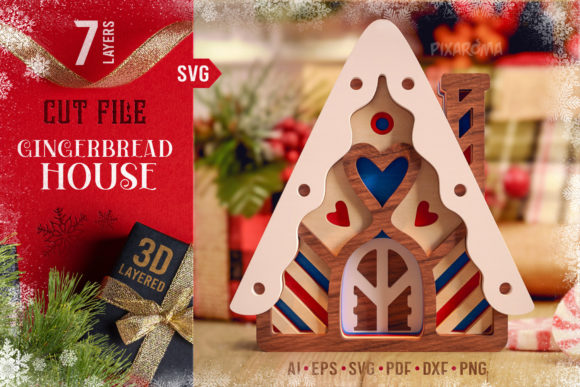
The mood this file creates is undeniably festive, tapping directly into the heart of the Winter Christmas aesthetic. The concept of a "3D layered" structure suggests that the final product will have significant visual weight and dimensionality. In the world of embroidery project planning, depth is often achieved through applique or heavy fill stitches. If you are looking to create a handmade product that stands out on a crowded Etsy shelf or in a boutique window, the silhouette of a gingerbread house offers instant recognition. It evokes warmth, nostalgia, and the tactile joy of the holidays.
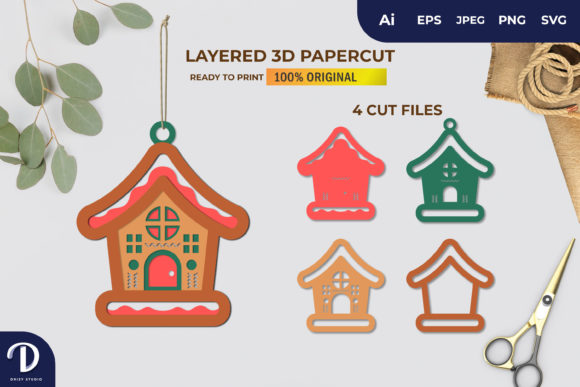
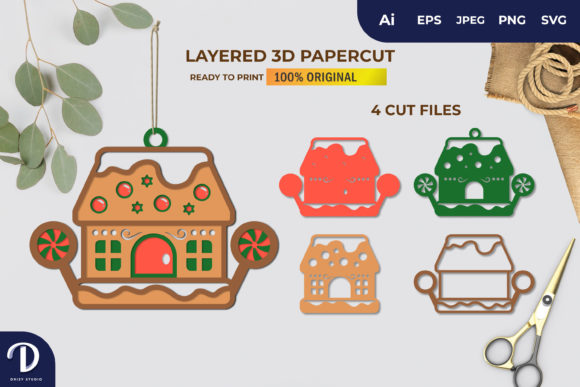
However, the transition from a flat SVG layer to a stitched reality requires careful thought. The layout implies distinct sections—walls, roof, windows, and perhaps decorative icing details. For a custom apparel item like a heavy canvas tote bag or a thick sweatshirt, these layers can be executed beautifully using satin stitching for outlines and dense fill stitches for the main body. The visual personality of the Gingerbread House 3D Layered Cut File is bold and graphic, making it less suitable for delicate, airy fabrics where heavy stitching might cause puckering.
Real-World Application: From Digital File to Finished Product
Let’s consider a real-life scenario. Imagine you are preparing a limited-run collection of holiday aprons for your craft business. You want the finished product to feel premium and durable. Using the Gingerbread House 3D Layered Cut File as a guide for your embroidery file conversion, you could treat each layer as a separate applique piece. The base walls could be a warm brown felt, while the roof and trim are white felt, mimicking royal icing. This approach transforms a simple digital product into a high-value personalized gift.
In this context, the design shines when applied to sturdy materials. A kitchen towel or a pillow cover would benefit immensely from the structured nature of the design. The stitch density required to replicate the 3D effect would add texture that customers love to touch. For the Etsy seller or small shop owner, this tactile quality translates to higher customer trust and engagement. People buy what they can visualize holding, and a raised, multi-layered gingerbread house on a cozy throw blanket screams "cozy winter."
Conversely, if you attempt to use this design on a thin t-shirt or a stretchy jersey fabric, you risk ruining the garment. The sheer volume of thread needed to mimic the 3D layers described in the Laser Cutting source file would likely distort the fabric. Therefore, understanding the limitations of the design is crucial before committing to a production run. Always test the design on scrap fabric first to see how the thread interacts with the material.
Navigating Technical Challenges in Embroidery
While the Gingerbread House 3D Layered Cut File is visually striking, it demands precision. One of the primary concerns when adapting a layered cut file for embroidery is the hoop size. Complex, multi-part designs often require larger hoops to accommodate all elements without re-hooping, which can lead to registration errors. If the design is split into too many tiny segments, the running stitch or satin stitch used to outline them may become fragile or prone to breaking during washing.
Another critical factor is the choice of thread colors. To achieve the "gingerbread" look, you need rich browns and creams. However, on dark fabric backgrounds, the contrast might not be sufficient unless you use a bright underlay or a backing stabilizer that shows through. Always review your mockups in black and white to ensure the tonal values work before you start stitching. Additionally, check whether the design works for both personal and commercial projects by confirming the licensing terms provided with the file.
Detailed corners and tiny lettering, often found in intricate gingerbread designs, can be problematic in embroidery. What looks crisp in a vector file can turn into a muddy blob of thread if the stitch count is too high for the scale. If you plan to include text within the house windows or doors, keep it large and simple. Dense stitch areas should be avoided on items that require frequent washing, such as baby clothes or daily-use kitchen linens, as the stiffness can wear down over time.
Strategic Use for Craft Entrepreneurs
For the creative entrepreneur, the value of the Gingerbread House 3D Layered Cut File lies in its versatility as a design asset. It can serve as the centerpiece for an embroidered patch, which is a fantastic way to offer customization without the commitment of full-garment embroidery. Patches allow you to control the background fabric and stabilizer perfectly, ensuring the 3D effect pops. These patches can then be sold individually or attached to caps, hats, and jackets.
When creating printable mockups for your online store, highlight the dimensionality of the design. Show how the layers interact with light and shadow to give potential buyers a realistic expectation of the commercial embroidery result. This level of detail builds brand consistency and professionalism. Whether you are selling the digital embroidery file itself or the finished goods, clear communication about the design's capabilities is key.
Finally, remember that the best holiday embroidery projects are those that balance creativity with practicality. The Gingerbread House 3D Layered Cut File offers a wonderful foundation for unique gifts, but it requires a skilled hand to translate its layered complexity into thread. By selecting the right fabric, using proper stabilizer, and testing your settings, you can turn this digital concept into a tangible masterpiece that brings joy to your customers this season.